Written by: Daniel Koren, Co-Founder, Frameology
Key takeaways
-
The U.S. picture frame market keeps growing, and online framing is expanding nearly three times faster than traditional retail. Buyers now have more convenient and affordable custom framing choices.
-
Modern online framers solve common pain points like decision fatigue, lack of visualization, and tricky gallery wall installation with AR tools and ready-to-use gallery wall templates.
-
Key decision factors for choosing a framer include archival materials, mobile AR previews, included installation hardware, fast turnaround times, and transparent pricing.
-
Frameology stands out as a top-rated provider in 2026. It offers premium U.S.-made frames, advanced AR visualization, and complete gallery wall kits with life-size gallery wall templates.
-
Ready to frame your favorite memories? Start at Frameology for high-quality, easy-to-install custom frames delivered fast.
How the online framing market has evolved
For decades, custom framing meant one thing: an expensive, slow trip to a specialty shop. The rise of direct-to-consumer framing promised to fix that, but early platforms introduced their own friction, with overwhelming option grids, no way to visualize results, and prices that still felt prohibitive for everyday buyers.
Those early pain points pushed the industry to innovate. The market has matured significantly. North America accounted for 36.81% of global picture frame market share in 2025, supported by high homeownership rates, frequent renovation cycles, and growing demand for personalized home decor. Rising interest in personalization is driving demand for custom sizes, photo collages, and theme-based frames for occasions such as weddings and travel memories, a trend made possible by e-commerce and digital printing technologies. The strongest online framers in 2026 address the original pain points: decision fatigue, visualization gaps, gallery wall installation complexity, and opaque pricing.
Popular product formats and AR tools
Online framing services usually offer several core formats: traditionally framed prints, canvas prints, frameless options such as metal, acrylic, and glass, and curated gallery wall sets. Each format uses different printing technology, such as continuous-tone archival printing for framed photo prints, high-resolution Giclée for canvas, and dye-sublimation for metal. The print surface matters just as much as the frame.
Visualization tools now separate basic services from premium ones. AR systems use device cameras, gyroscopes, and SLAM technology to build a live 3D map of a room and anchor digital content, like virtual frames, on real-world surfaces, keeping virtual objects aligned with walls as the user moves. The practical result is simple. Buyers can see exactly how a frame will look in their actual space before they commit. AR visualization reduces uncertainty in art display planning by letting users place and experience a digital version of an artwork in their space before purchase or hanging decisions.
Key decision factors when choosing a framer
Use this framework when you evaluate any online framing service. Start with the fundamentals that affect longevity and preservation.
-
Quality and materials: Look for acid-free mats, UV-protective glazing, and archival backing. Even high-quality inks and paper can fail if exposed to direct sunlight, high humidity, or poor mounting materials, so archival standards matter at every layer.
-
Visualization tools: After you confirm material quality, check whether the service helps you make confident design choices. A mobile AR preview reduces guesswork and lowers the chance of returns or disappointment.
-
Installation support: Even premium materials lose value when installation feels stressful. Gallery wall templates, included hardware, and clear instructions separate truly helpful services from ones that leave buyers on their own after checkout.
-
Turnaround time: Once quality and support are in place, consider speed. Convenience and ease of purchase have become central decision factors for online services, and shipping speed directly reflects that convenience.
-
Pricing clarity: Transparent pricing avoids frustration. Look for clear costs with no surprise add-ons for hardware, mats, or hanging systems.
-
Sustainability: Carbon-neutral shipping and responsibly sourced materials matter more every year, especially for younger consumers.
Planning and installing frames at home
Good planning makes framed art feel intentional instead of random. The standard recommendation for hanging art is to place the center of the piece 57–60 inches from the floor, which aligns with average eye level and prevents the common mistake of hanging pieces too high. For gallery walls, treat the entire grouping as a single composition and center it around the same 57–60 inch rule, with frames spaced 2–3 inches apart for visual cohesion.
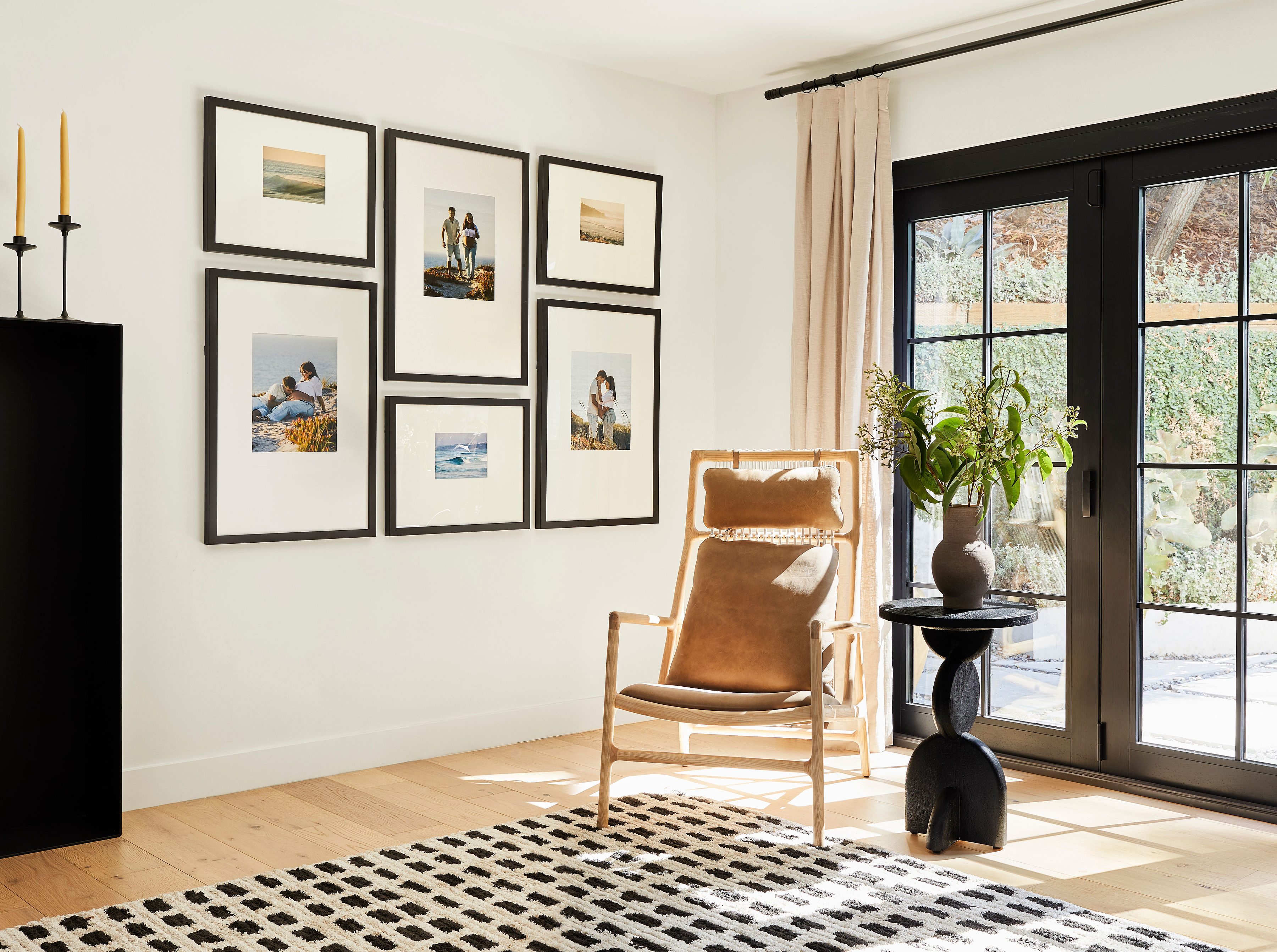
Art above furniture needs its own guidelines. When hanging art above furniture, position the bottom of the frame 4–8 inches above the furniture top, and make sure the grouping spans at least half to two-thirds of the furniture width. For mixed-frame gallery walls, the most reliable approach is matching frame color while varying sizes. A set of all-black frames in multiple sizes creates rhythm without visual chaos.
Single pieces also benefit from proportional frame widths. Narrower frames feel elegant and understated, while wider frames add visual weight and authority. For paper-based artwork and prints, always use acid-free mats and UV-protective glazing, and keep the artwork from touching the glass directly.
Ready to put these hanging tips to work? Design your custom frame at Frameology.
How Frameology compares to other providers
1. Frameology
Frameology was founded in 2015 by Ben Koren, with family framing roots in a 1986 Manhattan brick-and-mortar shop, which gives the brand more than 30 years of framing heritage. It has earned over 7,300 verified five-star reviews and a 4.98/5 overall rating, and has been featured by Architectural Digest and CNN Underscored.
Frameology offers two core framing tiers.
-
Classic Wall frames start at $59 and are hand-framed in the USA. They feature a removable backing so you can swap photos anytime, plus a single center hanger for horizontal or vertical display. Classic products typically ship the next business day and arrive within a week.
-
Luxe Wall frames start at $79 and are 100% made in the USA from premium solid wood and metal moldings, with acid-free mats, UV-protecting museum-grade acrylic, and a sealed kraft paper backing. Frameology uses museum-quality materials across its Luxe tier. All necessary hanging hardware, including nails, a mini-level, and a no-wire two-point hanging system, comes in the box. Luxe products deliver in 7–10 business days.
The mobile-only AR preview tool lets buyers project a true-to-scale version of their exact frame onto their wall before purchasing. Frameology’s AR technology allows users to design a gallery wall in 10 minutes by choosing a layout, uploading photos, and visualizing it on their wall, with no app download required.
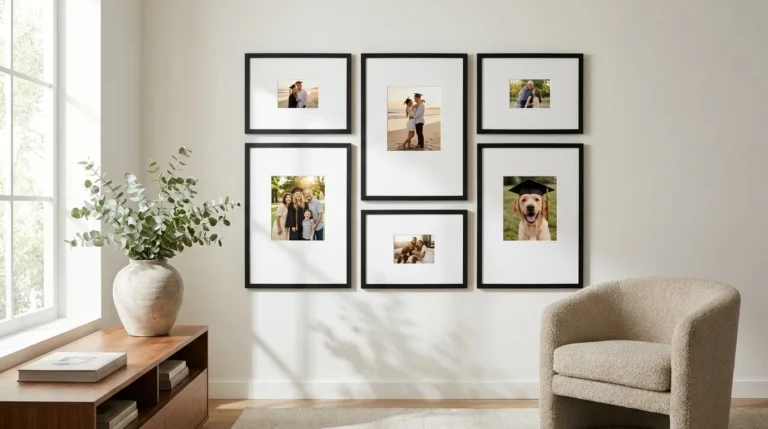
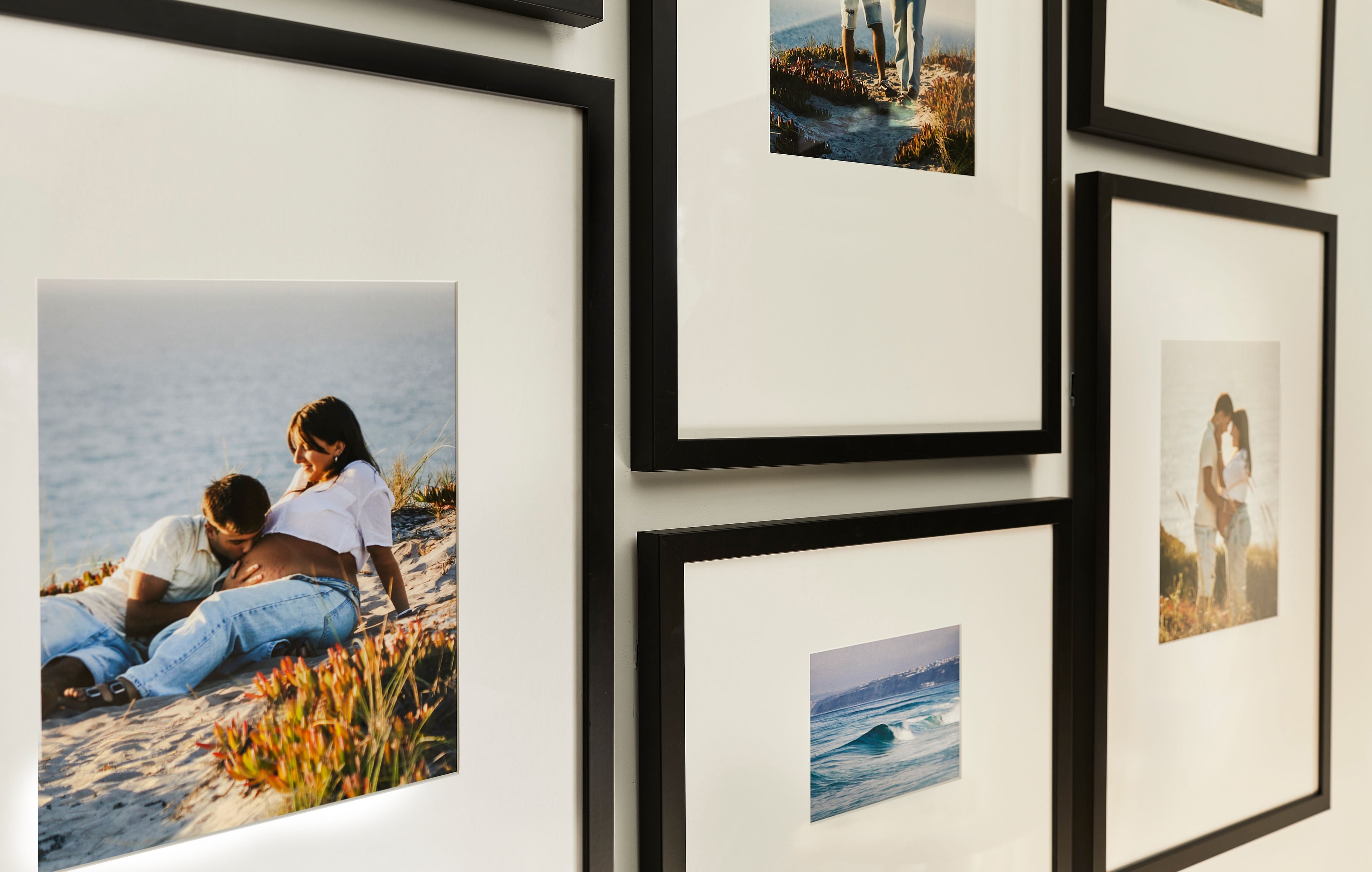
Gallery walls are where Frameology clearly stands apart. Classic gallery walls start at $198 and include a custom, life-size gallery wall template. You tape it to the wall, hammer the included hardware into the marked spots, remove the gallery wall template, and hang the frames. The process usually takes under 30 minutes and avoids extra holes. Luxe gallery walls start at $638 and use the same gallery wall template system, adapted for the dual-point hanging system on Luxe frames. Layouts range from the Classic Stack II at $198 to the Luxe Bricklay at $1,074.
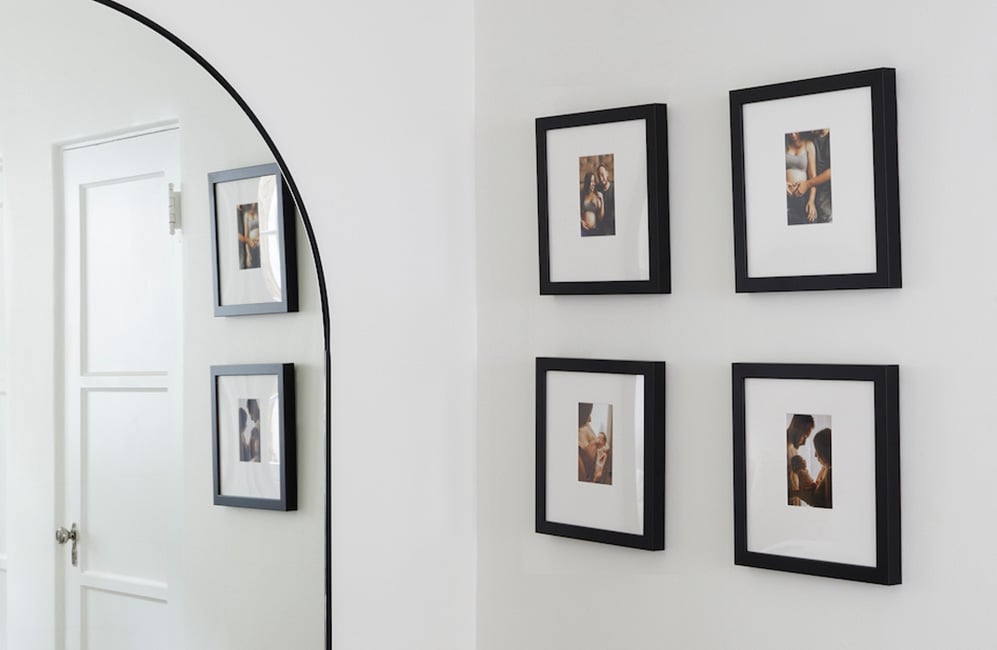
CNN Underscored’s reviewer described the Luxe Bricklay as “definitely a splurge, but it is one I would happily make again” after testing the full installation process. House Beautiful highlighted that Frameology ships frames with a true-to-size paper template and nails to mark exact hanging positions on the wall. Reviewed.com praised Frameology for high-quality prints, accessible pricing, and fast shipping.
Frameology also offers frameless formats, including Glass Prints from $39, HD Metal Prints from $65, and Premium Canvas Prints from $19. The company uses carbon-neutral shipping and thoughtfully sourced materials, and every product is printed and assembled in the USA.
2. Premium heritage-focused framing services
Premium heritage-focused framers center their offer on archival conservation and fine art standards. They target collectors and photographers with original works. These services usually provide a wide range of molding profiles, conservation-grade glazing options, and detailed customization. Turnaround times often run two to three weeks, and pricing reflects the bespoke nature of the work. They work well for high-value originals where archival preservation matters most, although the digital experience and gallery wall support tend to be limited.
3. Budget-oriented print-and-frame platforms
Budget-oriented platforms compete mainly on price. They offer entry-level framing at accessible price points with a broad catalog of frame styles. The trade-off usually appears in material quality. Glazing may not be UV-protective, mats may not be acid-free, and hardware is often missing. Shipping timelines vary widely. These platforms suit buyers who prioritize low upfront cost over long-term archival protection or premium finish.
4. Large-format and canvas-specialist services
Large-format and canvas-specialist services focus on canvas and oversized printing. They offer gallery-wrap canvas, oversized prints, and frameless display options. Their framing catalog is narrower, but their canvas output, especially for landscape photography and abstract art, can be strong. Visualization tools and gallery wall support are usually limited or absent.
5. Subscription and membership-based framing services
Subscription and membership-based framers bundle framing credits into a monthly or annual plan. They appeal to buyers who frame frequently. The value depends heavily on volume. Occasional buyers often pay more than they would on a per-order basis. Material quality and turnaround times vary by tier.
6. Marketplace aggregators with framing options
Some e-commerce marketplaces offer custom framing as an add-on to art print purchases. This setup lets buyers frame and ship in a single transaction. The convenience is real, but framing quality can be inconsistent and customization options are limited. Gallery wall support and AR visualization usually are not available.
7. Local frame shop online extensions
Many traditional frame shops now run e-commerce storefronts, bringing in-person expertise to an online ordering flow. Quality can be high, especially for unusual sizes or specialty materials, but pricing often reflects brick-and-mortar overhead. Turnaround times are usually longer than pure-play online services, and digital tools such as AR previews rarely appear.
Common framing mistakes to avoid
Even experienced decorators run into the same pitfalls when ordering and hanging frames. Knowing what to watch for helps you get it right the first time.
-
Ignoring archival standards: Off-the-shelf frames and materials often contain acidic components that cause yellowing, discoloration, paper deterioration, and fading from UV exposure over time. Always confirm that mats are acid-free and glazing is UV-protective before you order.
-
Skipping visualization tools: Choosing a frame without previewing it in your space often leads to mismatched scale, color clashes, and returns. Use an AR tool whenever one is available.
-
Underestimating gallery wall complexity: Measuring, spacing, and leveling multiple frames without a gallery wall template or included hardware frustrates many homeowners. Choose a provider that includes a gallery wall template and all necessary hardware.
-
Overlooking shipping timelines: If you need a frame for a specific occasion, confirm production and delivery timelines before you order. Standard and artisan timelines can differ significantly between product lines.
-
Choosing frame size without considering furniture scale: Art or a gallery grouping hung above furniture should occupy at least one-half to two-thirds of the furniture’s width to keep the room visually balanced.
Frequently asked questions
What is the difference between Classic and Luxe frames at Frameology?
Classic frames focus on value and speed. They are hand-framed in the USA, start at $39 for tabletop and $59 for wall display, and include a removable backing so you can swap photos anytime. Classic products typically ship the next business day and arrive within a week.
Luxe frames 100% made in the USA from premium solid wood and metal moldings, with acid-free mats, UV-protecting museum-grade acrylic, and a sealed kraft paper backing that protects the framed photo. All necessary hanging hardware, including nails, a mini-level, and a no-wire two-point hanging system, comes in the box. Luxe Wall frames start at $79, and the artisan production timeline is 7–10 business days.
Do all gallery walls include hanging templates?
Classic and Luxe gallery walls include life-size gallery wall templates that make installation simple and straightforward. Canvas galleries, Metal galleries, and gallery walls created using Frameology’s Gallery Wall Design Service do not include gallery wall templates because their construction and customization work differently and often require more tailored installation approaches.
How does Frameology’s AR preview tool work?
Frameology’s augmented reality tool works on mobile devices only. Open the Frameology website on your phone, customize your frame or gallery wall, and tap the AR icon. Your phone’s camera then projects a true-to-scale preview of the exact frame onto your wall in real time. You do not need an app download or an account. The tool works for both framed pictures and photo gifts, and it lets buyers evaluate scale, color, and placement before they commit.
How should I choose between a single framed piece and a gallery wall?
A single framed piece works well as a focal point above furniture or in a smaller space where one strong image can anchor the room. The standard guidance is to center the piece 57–60 inches from the floor and make sure it spans at least half to two-thirds of the furniture width below it. A gallery wall suits larger walls, hallways, or stairwells where a single piece would feel undersized.
Frameology’s Classic and Luxe gallery walls come with a life-size gallery wall template that removes most of the measuring and leveling work, so multi-frame installations feel manageable without professional help.
The right framer for your space
The evaluation framework stays simple: archival materials, visualization tools, installation support, clear pricing, fast turnaround, and sustainability. Across each of those criteria, Frameology leads the field in 2026. Its 30-plus years of family framing heritage, mobile AR preview tool, Classic and Luxe tiers with transparent pricing, life-size gallery wall templates, hand-framed-in-the-USA craftsmanship, and 7,300-plus verified five-star reviews make it one of the most complete online framing services available to U.S. consumers today.
Whether you want a single framed print for a living room wall or a full Luxe Bricklay gallery wall for a renovation, Frameology delivers the quality, speed, and support to get it done right.